























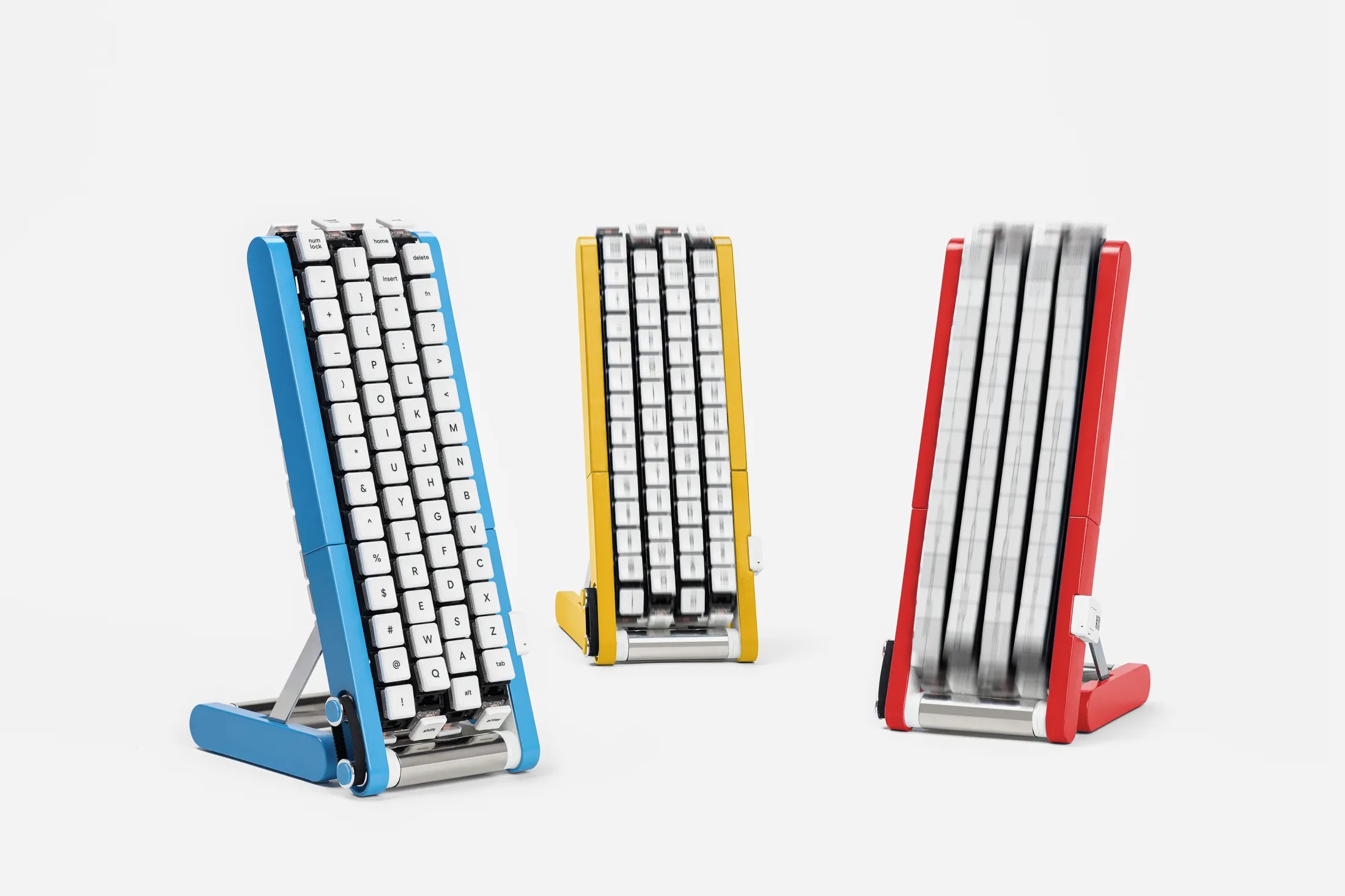
Google Japan’s Gboard team has published its 15th “new keyboard proposal,” and for 2026 it is the Gboard Kurukuru Version, a Gboard conveyor belt keyboard whose motorized belts roll the keys past your fingers. Google says it has no plans to sell the device, but it published open-source files for the moving-key mechanism. Wiring documentation and the functional Bluetooth edition are still marked “coming soon.” The announcement went live on the Google Japan blog on October 1, 2026.
How the conveyor-belt keyboard works
The Kurukuru Version is a motorized panel holding four vertical belt loops, and each belt carries 29 keycaps in a repeating sequence. Because the full alphabet is printed directly on the belts, uppercase and lowercase letters each get their own key, so there is no shift layer to memorize. You simply type each letter as its key scrolls into reach. Google calls this a Copernican turn: the keyboard comes to you instead of the other way around.
Since one hand can reach every key, Google’s pitch is one-handed use: the other hand can hold a cup of tea or rest on a mouse. The team even suggests a second unit might bring two-handed productivity back to the desk.
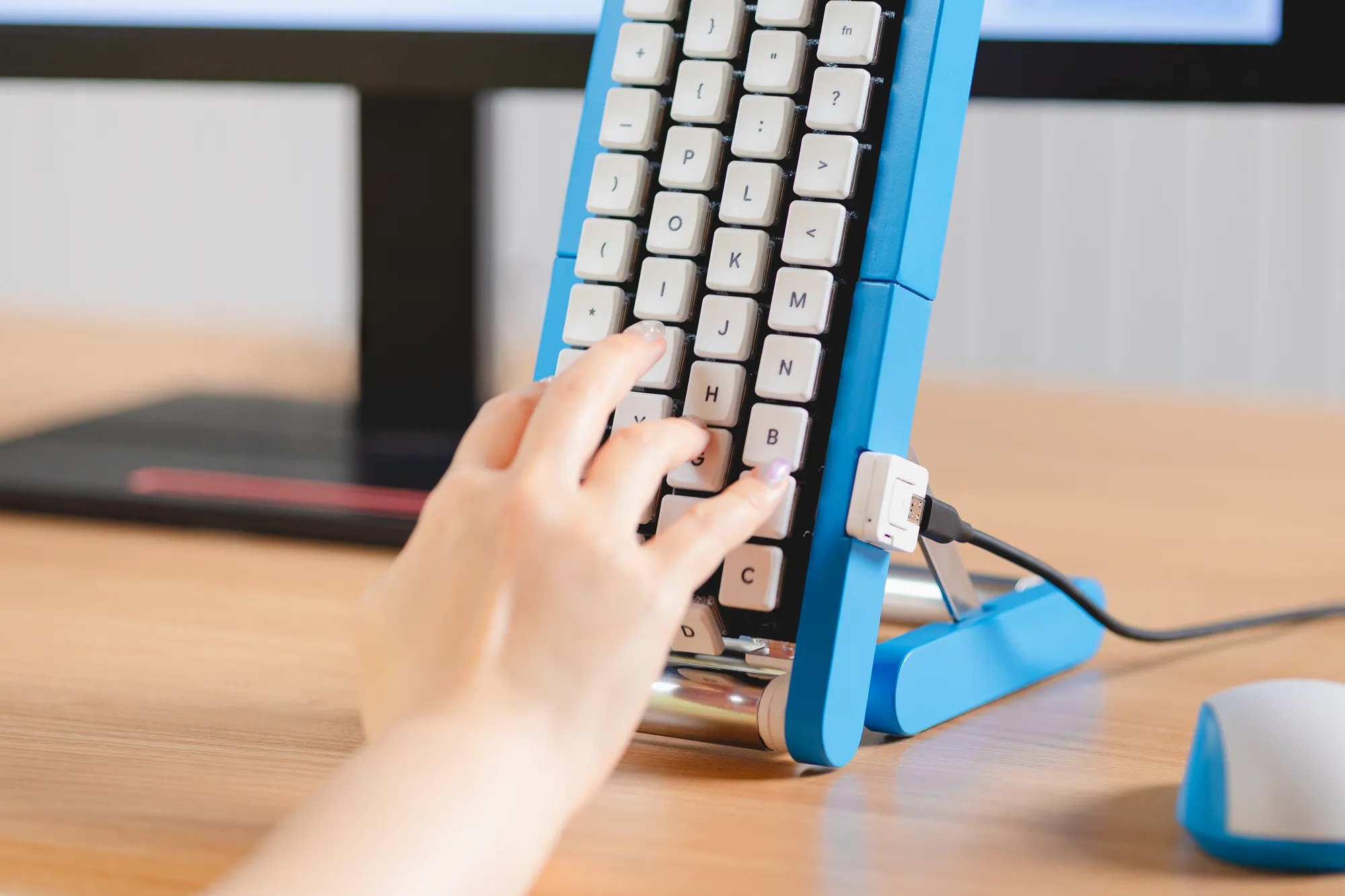
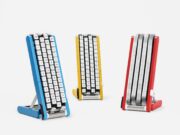
The official photos show blue, yellow and red versions, with motion blur smearing the red unit’s keys. As for what comes next, the team says it is “considering” trend-based colors, a high-speed mode, a longer version with more characters, and a short portable one. However, nothing in the post commits to shipping any of them.
Build one yourself, if you like soldering
The FAQ is blunt about whether you can buy one.
There are no plans to sell it, but we are publishing the design blueprints as open source so you can build a similar device yourself.
Gboard team, Google Japan blog FAQ (translated from Japanese)
Those files live in mozc-conveyorbelt, a folder in Google’s mozc-devices repository, which is licensed under Apache-2.0. It contains KiCad schematics and PCB layouts, firmware source plus prebuilt binaries, and 3D-printable STL files for the case and mechanisms.
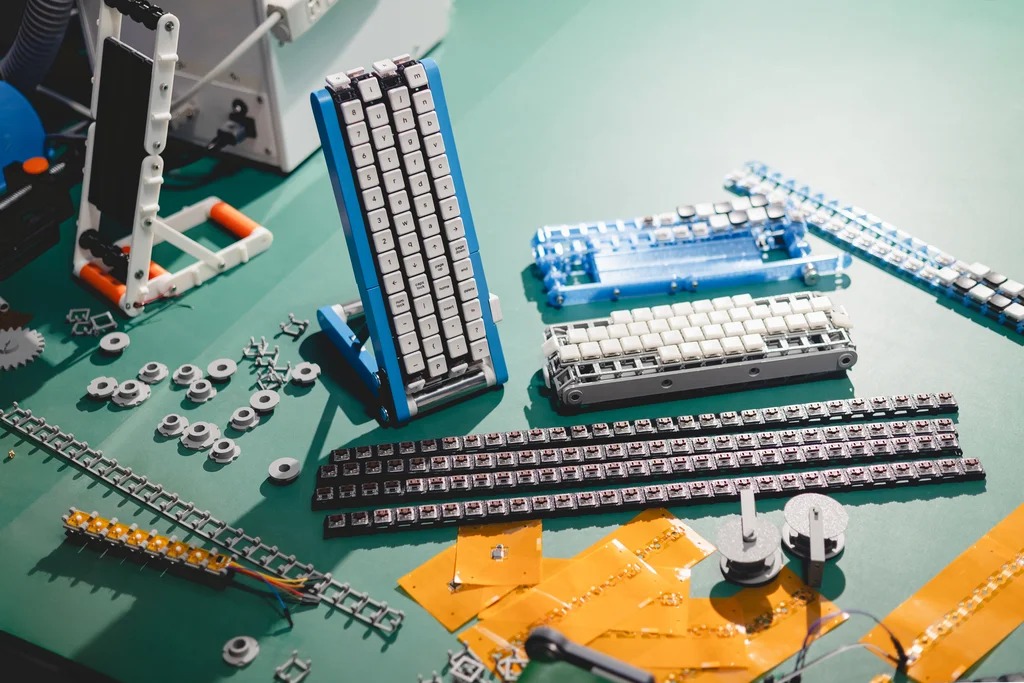
One caveat for weekend builders. The build guide currently documents only the Moving Keys Edition, the motorized version. Board wiring documentation and a Bluetooth keyboard edition are still marked “coming soon.” So the package is partial today, and the repository gives no date for the rest.
A long-running tradition of keyboard stunts
This is the 15th entry in Google Japan’s running tradition of publishing impossible input devices. The team’s collection page recaps past proposals, and Google’s own repository table dates the line back to a drum-set Japanese input device in April 2010. Later stunts included a full-width desk bar, a double-sided board, a keycap ring, a wearable keycap hat, a rotary-dial board and one that bends spoons.
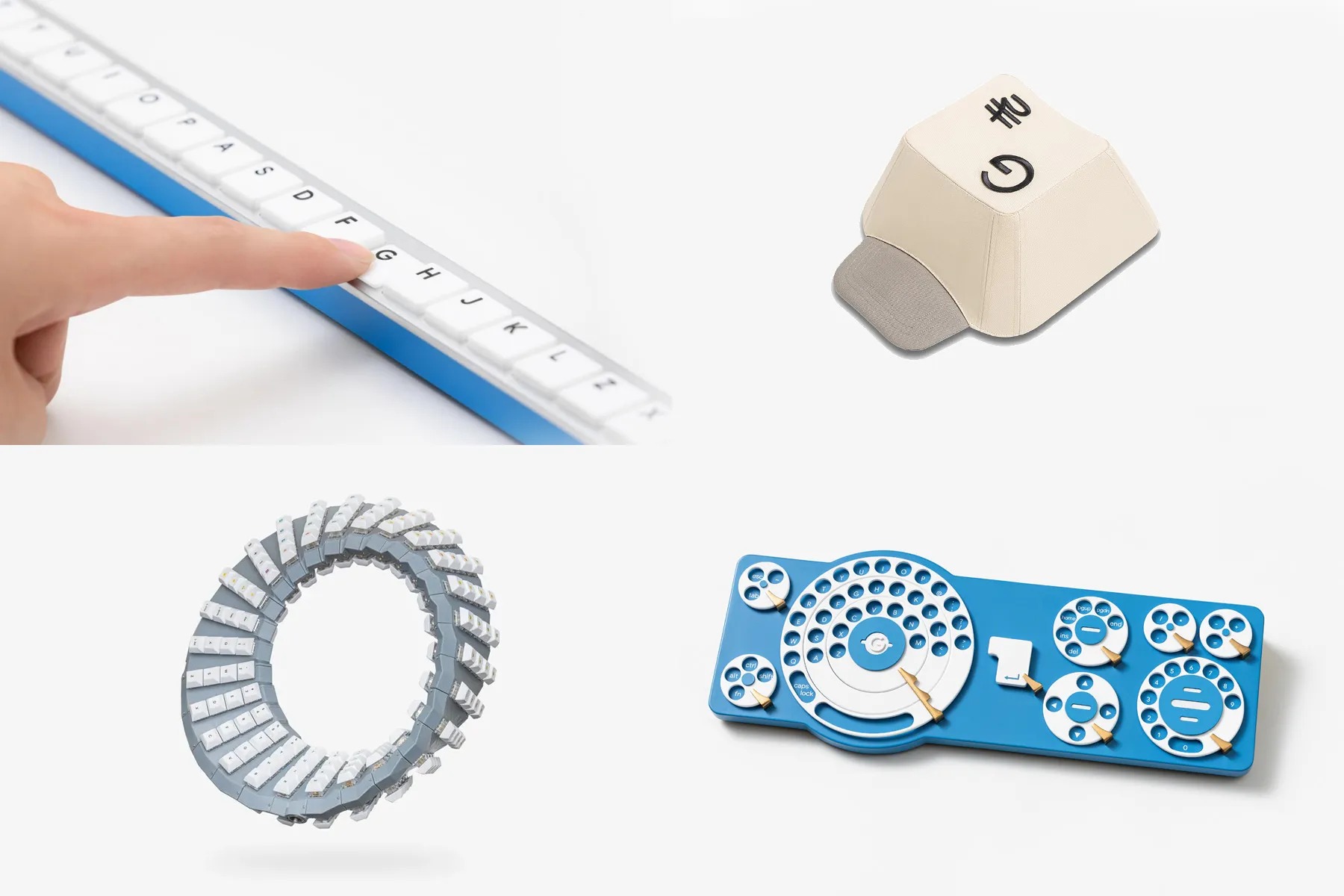
Google has published design data for some earlier stunts too, but this year’s files mean the joke can actually sit on your desk. A 3D printer gets you the frame; the bill of materials also calls for 116 low-profile switches and keycaps, a motor, a driver board and a handful of screws. Meanwhile, the standard Gboard app keeps doing the practical work of typing.
What is still unknown
There is no price: the FAQ says there are no plans to sell it, and the announcement names no market. However, the Apache-2.0 license means builders worldwide can download the files and print their own parts. TMM has covered stranger desks before, from a roll-up keyboard to an app for keyboard-walking cats. The belts, though, are new.